



Yoowarl Koorl Djinang – Come Look See: 10 New Sculptures at Wadjemup Museum
Discover stories and connect with culture through ten striking new works in the Wadjemup Museum Sculpture Garden.
5 minutes
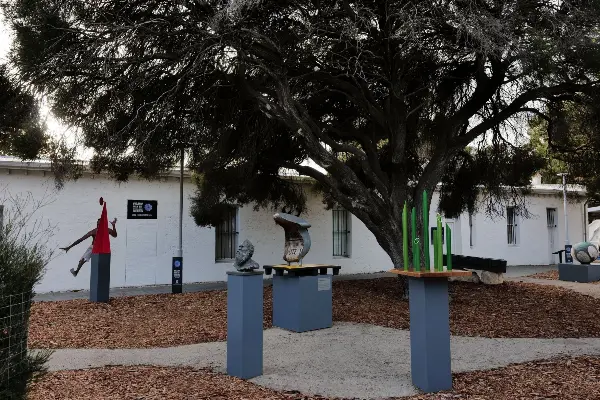
Wandering the grounds of the Wadjemup Museum Sculpture Garden invites discovery and reflection. Here, perspectives are presented and stories shared.
Under the dappled light of large maro trees (Rottnest Island pine), you’ll find ten unique sculptures as part of the continuing Yoowarl Koorl Djinang / Come Look See Exhibition.
Around the garden, local artists present their unique interpretations of the history, heritage and landscape of Wadjemup / Rottnest Island.
All are welcome to visit this free exhibition, which is open 24/7 until 30 June 2027. While you’re visiting the island, make time to reflect upon the layered stories shared through the art of sculpture here in the garden.
All but three of these artworks are available for purchase and 100% of the proceeds go directly to the artists, supporting their practice and communities. All artworks will remain in the museum whilst purchased until the exhibition concludes in June 2027.
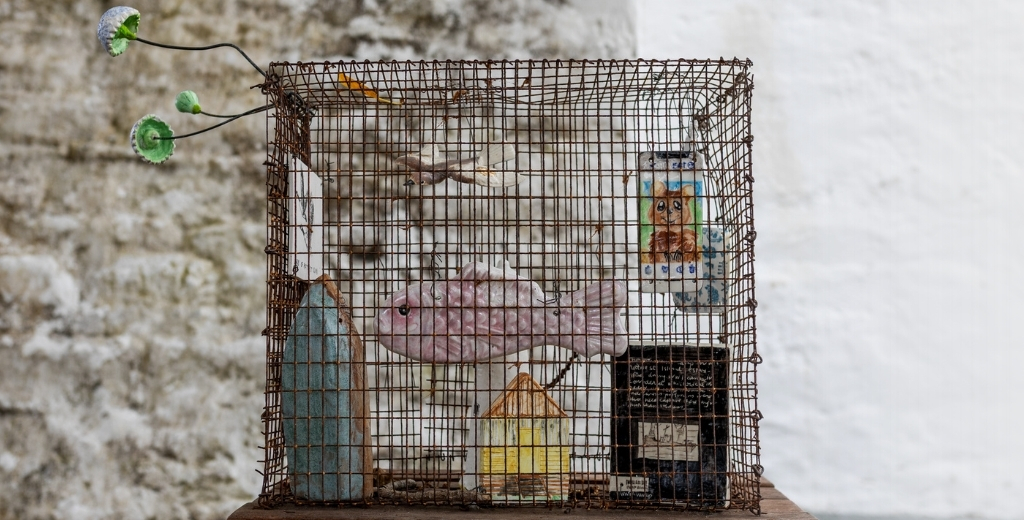
Artist: Marian Giles
Porcelain, vintage craypot
$750
Come closer to peer into the artfully weathered cray pot, set against the earthy exterior of Wadjemup Museum. A collection of ceramics lay nestled inside, representing “porcelain pieces of Wadjemup past and present”. As you observe, consider your own memories of the island: what might you put in your own cray pot?
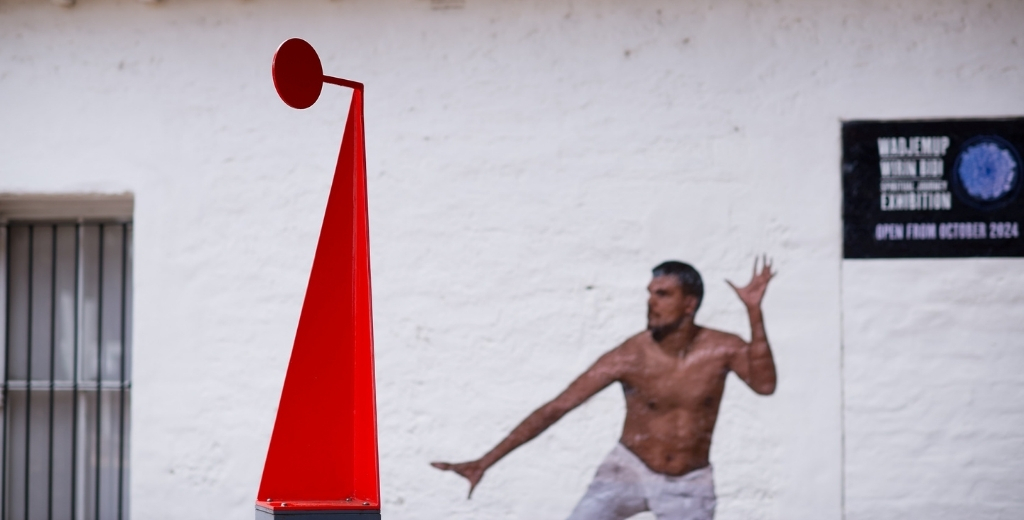
Artist: David Spencer
Painted steel
$4,180
The vibrant red steel and towering height of Permanence demand attention in the earthy garden surrounds. Move around the angular base and cast your eyes above to its soft and uplifting form – designed to acknowledge steps towards reconciliation.
I really wanted to make a point of the duality of Rottnest Island: there are two histories here and we’ve got to acknowledge both.
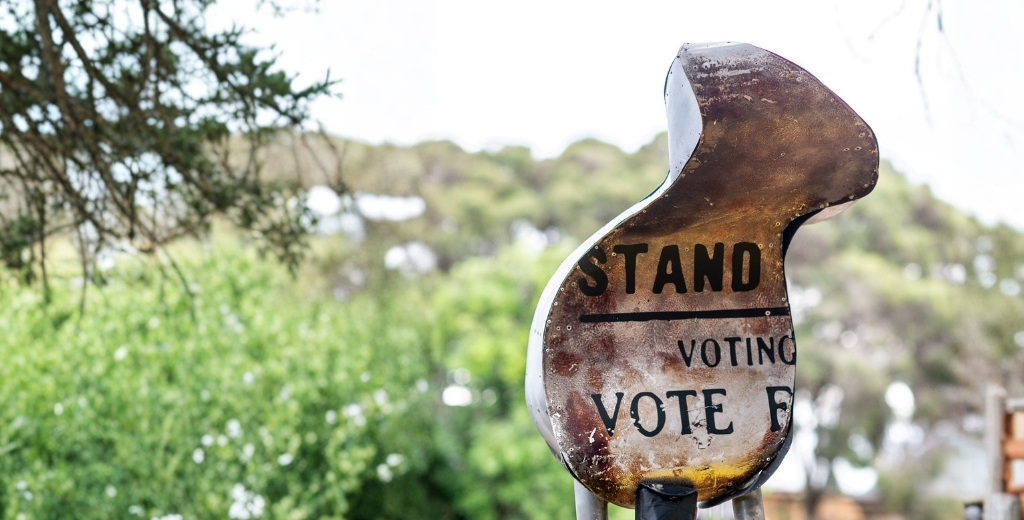
Artist: Jon Denaro
Repurposed aluminium signage
$8,800
At first glance, the creature that inspired the sculptural shape may not be obvious. During a swim, the artist noticed a nudibranch (a type of sea slug) dancing beneath the waves. Often discovered on snorkel trails, these creatures are fluid and curvaceous – giving rise to the “amorphous oceanic form built out of messages from governance.
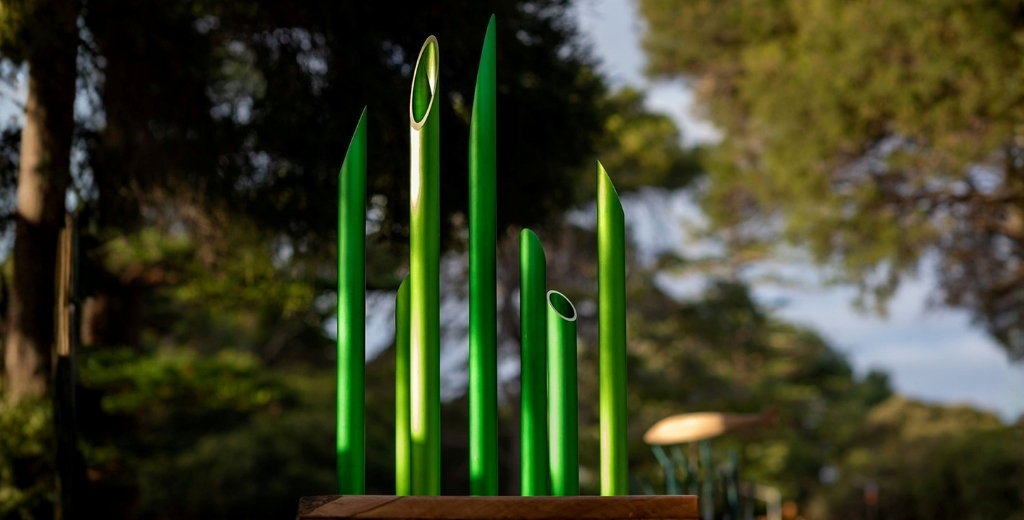
Artist: Anton Lord
Painted aluminium, tuart timber
$6,000
Delicate, tubular and difficult to find. That sums up the djilap-dek (prickle lily): the inspiration behind Burt. As you move around the garden, this sculpture is anything but. The anodised aluminium dazzles in the sunlight with its luminous green colouring. Take a good look, then take to the trails of the Wadjemup Bidi to see if you can spot the pointed leaves of this elusive plant.
There’s lots of small, beaten track, behind-the-scenes stuff you can go and see on foot – like the small prickle lily that’s poking out of the ground.
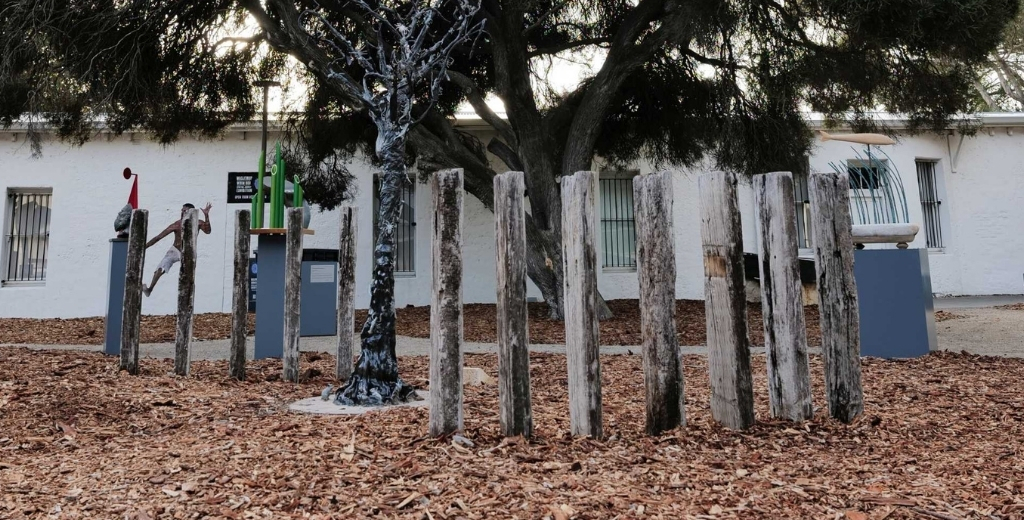
Artist: Geoff Overheu
Bronze
$25,000
Towards the perimeter of the garden, this bronze tree stands strikingly tall to deliver an impactful reminder of our shared responsibility to the environment. Younger minds may delight in pointing out creatures clambering up the rugged branches, while adults may ponder the artist’s appeal to action:
If we keep going down the path we’re going… then there’s a good chance this will be the last tree on Rottnest Island.
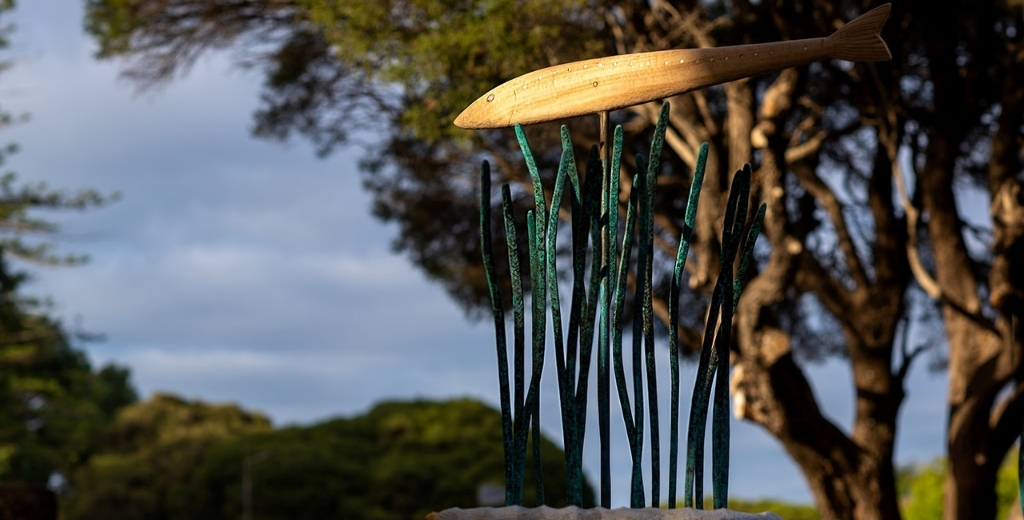
Artist: Shaun Chambers
Forged copper, tuart, sandstone, stainless steel
$9,600
Gliding through the maambakoort djooraly (seagrass meadow) is where snorkellers and swimmers will spot flashes of this fish. The artist’s appreciation for Wadjemup’s marine environment is reflected in the sculpture’s kinetic elements, which move with the rhythms of the island. It’s a gentle call to pause and honour life below the water.
You can’t quite put your finger on it, but there’s a sudden sigh of relaxation as the background noises and electronic buzz that’s around us every day falls away.
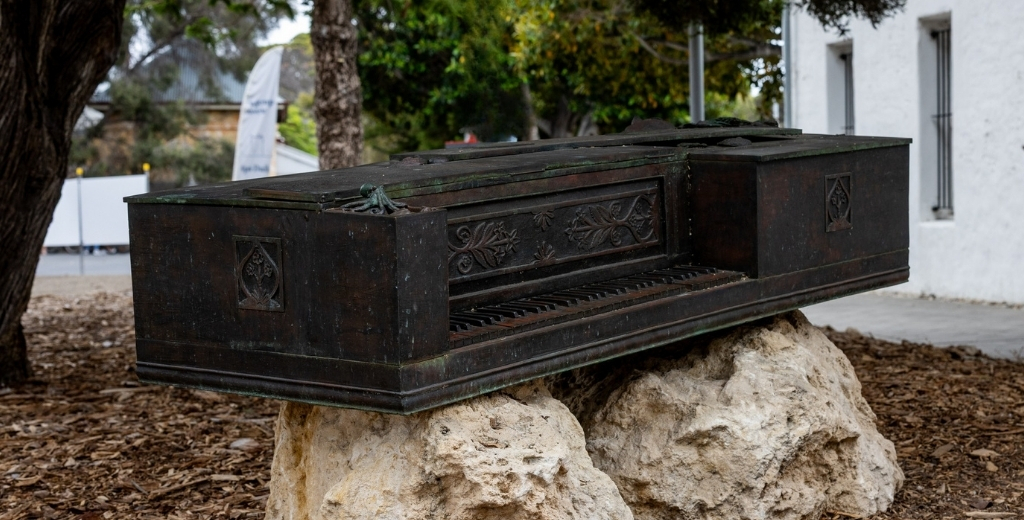
Artist: Greg James
Bronze
$124,000
This ornate bronze sculpture echoes the turbulent arrival tale of the artist’s ancestors, whose ship was thrust onto the Western Australian coastline in 1829. Beyond stories of travel, the work presents a deeper reckoning: the profound and lasting impact of colonisation, and exists as “a nod to resilience”.
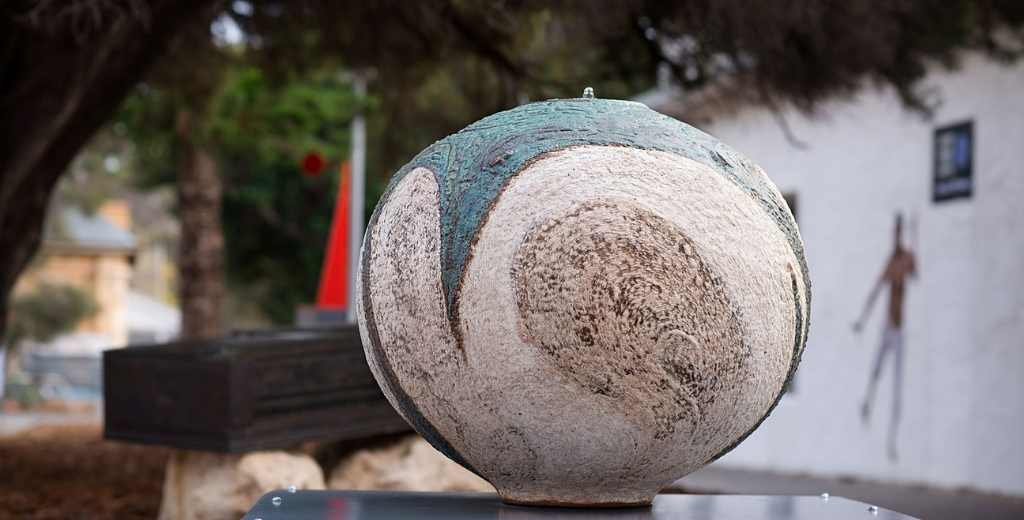
Artist: Warrick Palmateer
Kiln-fired earth
$14,000
The work serves as a poignant reflection of life’s fundamental truth: change is the only constant. Such is true for many visitors’ understanding of the island’s past. As the current depicted in this ceramic sculpture flows and changes, so too does our connection to the island’s past, present and future.
I spent a lot of time here as a child… we didn’t have a great understanding of the island as far as the history, but you knew there was something… there’s an undercurrent here.
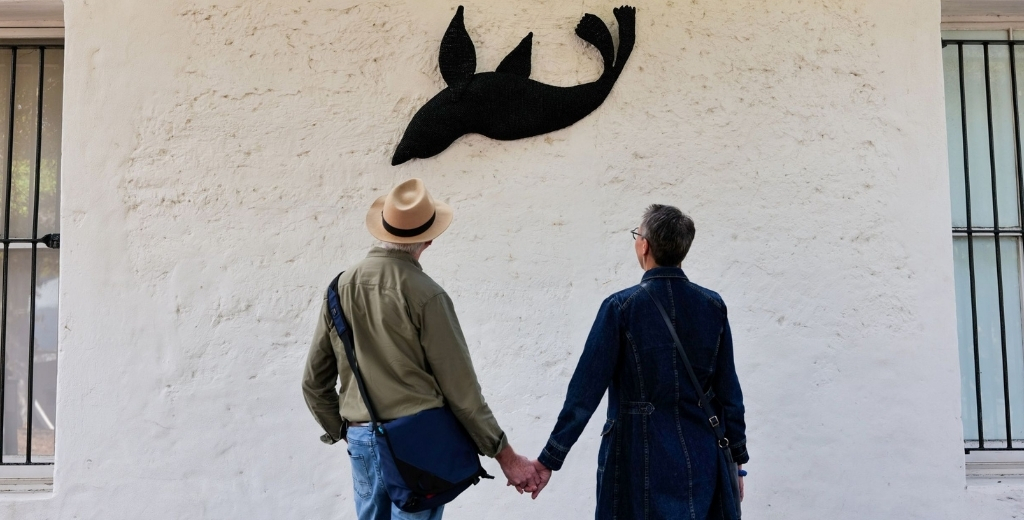
Artist: Mikaela Castledine
Crocheted polypropylene
$4,400
Playfully perched on an exterior wall of Wadjemup Museum is a crocheted manyil (long-nosed fur seal). Every carefully constructed loop ties in the artist’s memories as a visitor on the island, for both work and leisure. Over towards the West End at Cathedral Rocks viewing platform is where colonies of these seals can be found. Consider that these seals are also visitors to this place, in all its rugged beauty.
We are all visitors, whether by tradition or accident, oppression or opportunity to a place which endures.
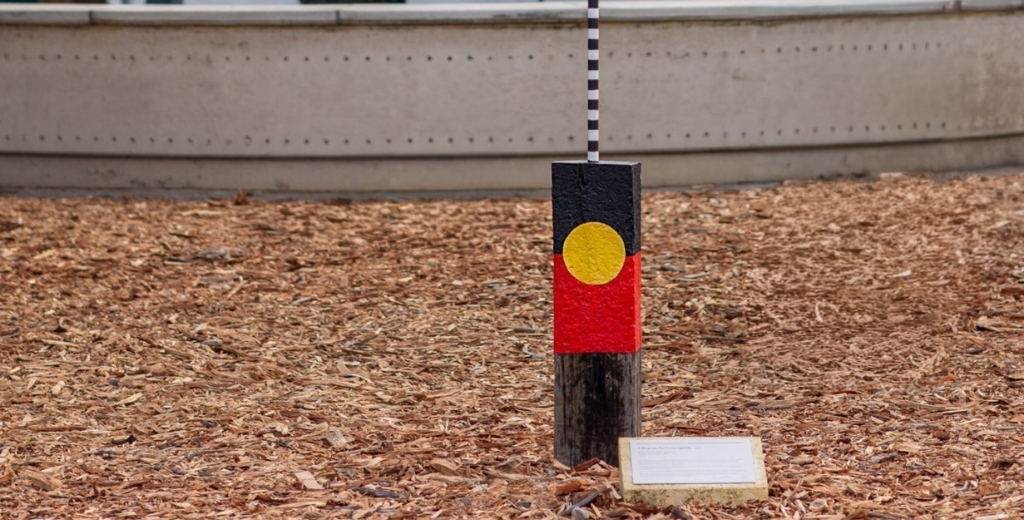
Artist: Tom de Munk Kerkmeer
Timber, steel, acrylic paint
$2,500
At the garden’s edge, this colourful sculpture stretches high into the sky. As part of a belated mourning ritual for his own father, the artist visited Wadjemup many times. Gazing up at the narrow timber and steel frame, visitors are called to reflect:
Can the spiritual knowledge of the Noongar culture help us to become better human beings?
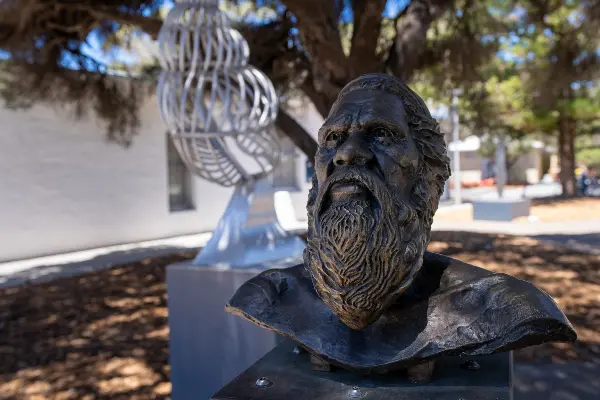
While the ten featured artworks above are temporary and available for purchase, the following three sculptures are permanent fixtures of the exhibition. These pieces were generously gifted and are not for sale. Instead, they form an enduring part of the collection.
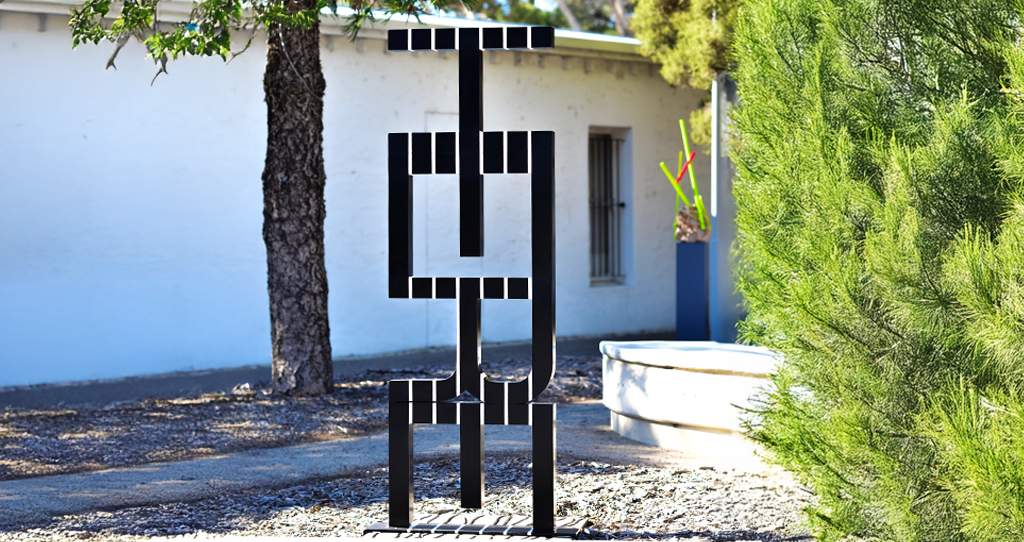
Artist: Anne Neil
Painted marine grade aluminium
Donated by the artist to the Wadjemup Museum Collection and not for sale.
This abstract work invites quiet reflection, calling us to consider the layers of history held in the land beneath our feet.
Here describes not what it is, but how it is. In this place, bound in chains he stood here.
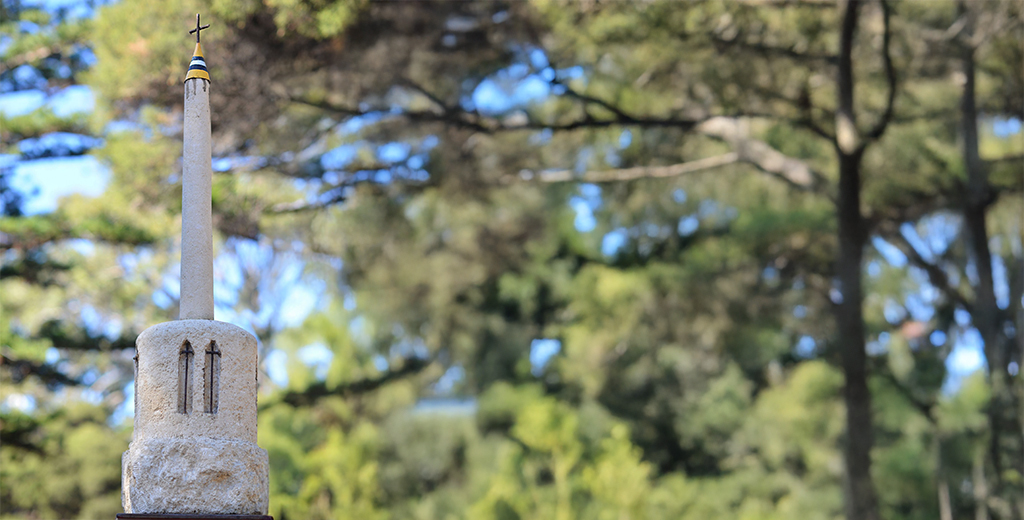
Artist: Lesley Meaney
Limestone, steel, reclaimed timber
Donated by the artist to the Wadjemup Museum Collection and not for sale.
Inspired by the annual Rottnest Channel Swim, the work reflects the artist’s reimagining of the mass movement of swimmers and paddlers as a modern-day pilgrimage - one that begins on the shores of Cottesloe and culminates in a communal celebration on Wadjemup.
The pylon’s physical presence in my church-like version resonates as a literal metaphor for congregation.
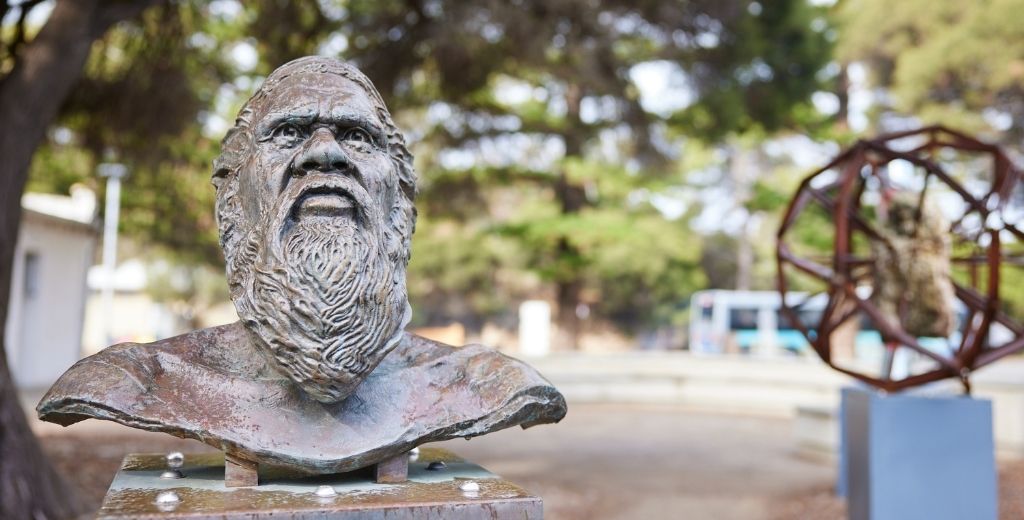
Artist: Nicole Mickle, Safehaven Studios
Cast in bronze
Gift of The Copland Foundation and not for sale.
Graceful and proud, this striking work stands as a reminder that we live and walk on Noongar country and pay deep respect to the oldest living culture on the planet. Historical photographs dating from the 1870s to the early 1900s, coupled with contemporary images of Noongar men today, guided the creation of this bronze. This figure is an adaption of the original study from which evolved a striking 5-metre-high contemporary artwork, Wardandi Boodja, at Koombana Bay, Bunbury.
Not one man… but all Noongar men.
-created-by-james-egan.jpg?sfvrsn=631c8792_1)
Artist: James Egan
Re-purposed wire
Donated by the artist to the Wadjemup Museum Collection and not for sale.
Always Was, Always Will Be is a reflection upon the history of the Western Australian coastline, which has provided for Nyoongar peoples and supported survival. The coastline was also the site of arrival for the British, who then went on to transport Aboriginal peoples from across the state to Wadjemup, to be imprisoned and is also home to the unmarked graves of over 350 Aboriginal men. Wadjemup is a place of great cultural importance for Nyoongar people, a place where spirits travel after death. The artist asks us to consider the complex history of the Island.
Make your visit even more meaningful with helpful advice from those in the know.


_low-res-180.tmb-tall_l.webp?Culture=en&sfvrsn=e8f80bc1_1)